
Root Canal Treatment in Indore can help save a natural tooth when the soft inner tissue, known as the dental pulp, becomes inflamed or infected. Tooth decay, cracks, repeated dental procedures, or injuries can sometimes damage the pulp and cause significant pain or infection.
Many people try to ignore tooth pain because they hope it will go away on its own. However, persistent dental pain, sensitivity, swelling, or a damaged tooth may indicate that the infection has reached deeper parts of the tooth. Early dental evaluation can help prevent the problem from becoming more serious and may allow the natural tooth to be preserved.
At Indore Poly Dental Clinic, Dr. Saumya Jain, an experienced Endodontist and Root Canal Specialist in Indore, provides advanced and patient-friendly root canal care. With a focus on preserving natural teeth, accurate diagnosis, and comfortable treatment, the clinic helps patients manage infected or damaged teeth effectively.
Best Dental Clinic in Indore – Indore Poly Dental Clinic
Indore Poly Dental Clinic is one of the trusted dental clinics in Indore, offering comprehensive dental, restorative, and oral surgical care for children, adults, and senior citizens.
The clinic is led by Dr. Sandesh Jain, an experienced Oral & Maxillofacial Surgeon, and Dr. Saumya Jain, an experienced Endodontist and Root Canal Specialist.
Dr. Saumya Jain focuses on diagnosing and treating problems involving the dental pulp and tissues surrounding the tooth root. Her expertise includes root canal treatment and conservative dentistry, with an emphasis on preserving natural teeth whenever possible.
The clinic combines modern dental technology with a gentle approach to make dental treatment more comfortable and less stressful for patients.
What is Root Canal Treatment?
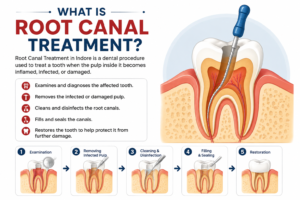
Root Canal Treatment in Indore is a dental procedure used to treat a tooth when the pulp inside it becomes inflamed, infected, or damaged.
The dental pulp contains nerves and blood vessels. When deep decay, cracks, trauma, or repeated dental procedures damage this tissue, bacteria can enter the inner part of the tooth and cause infection.
During root canal treatment, the dentist:
- Examines and diagnoses the affected tooth.
- Removes the infected or damaged pulp.
- Cleans and disinfects the root canals.
- Fills and seals the canals.
- Restores the tooth to help protect it from further damage.
The main goal is to remove infection while preserving the natural tooth.
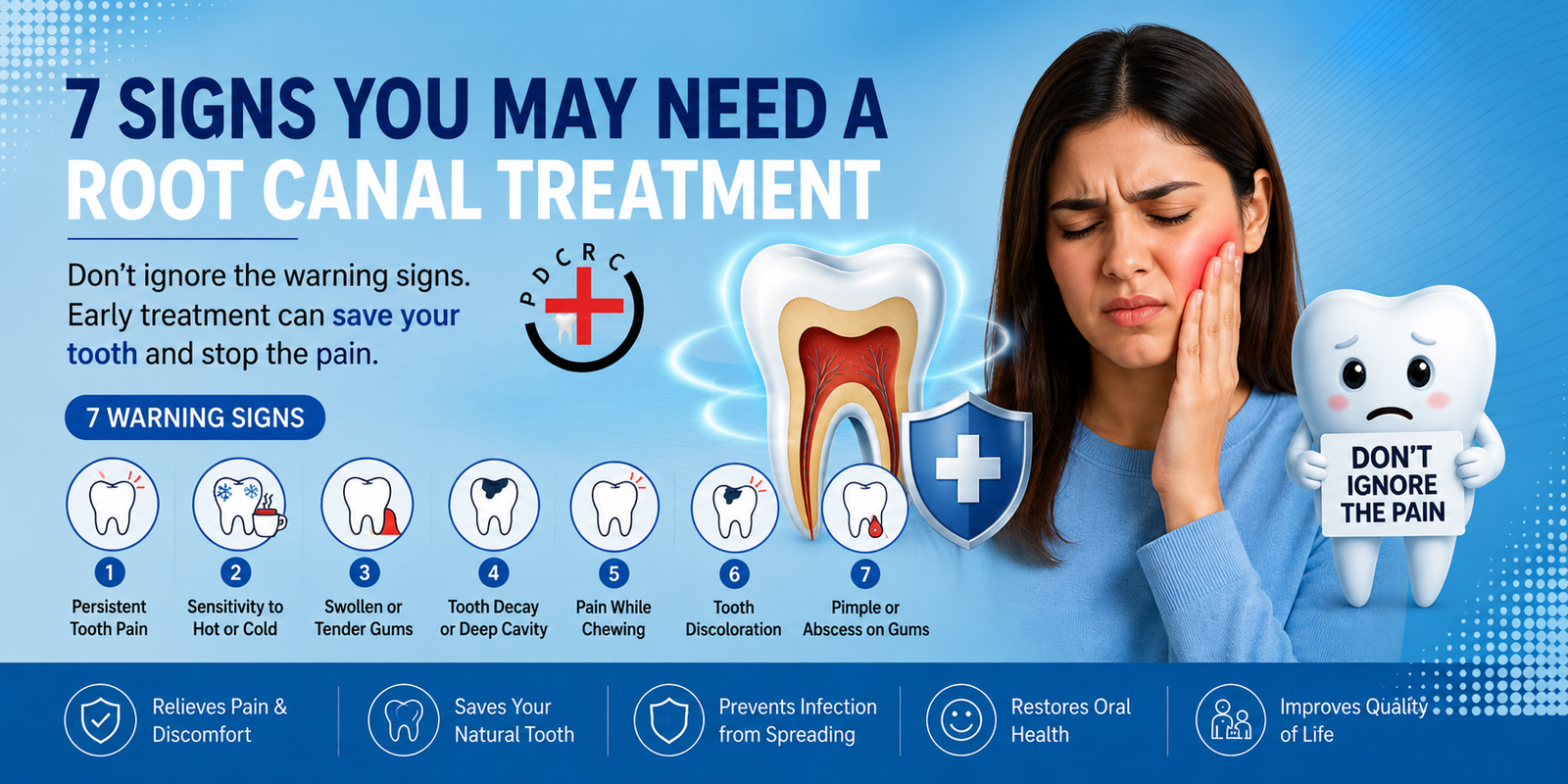
7 Signs You May Need a Root Canal Treatment
Not every toothache means that you need a root canal. However, certain symptoms may indicate that the pulp inside the tooth is significantly inflamed or infected.
Here are seven important warning signs that should not be ignored.
1. Severe or Persistent Toothache
A severe toothache is one of the most common reasons people seek dental treatment.
Pain may be:
- Constant or intermittent
- Sharp or throbbing
- Worse while chewing
- More noticeable at night
- Difficult to ignore during daily activities
If tooth pain continues for several days or keeps returning, it is important to have the tooth examined.
A persistent toothache can occur because of deep tooth decay, pulp inflammation, infection, or other dental conditions.
Early diagnosis can help determine whether a root canal or another treatment is appropriate.
2. Prolonged Sensitivity to Hot or Cold
Temporary sensitivity after eating something hot or cold does not always indicate a serious problem.
However, if the sensitivity is intense or continues for a long time after the hot or cold food or drink is removed, it may indicate inflammation of the dental pulp.
You may notice pain after consuming:
- Hot tea or coffee
- Cold water
- Ice cream
- Cold beverages
- Very hot foods
If the pain lingers rather than disappearing quickly, consult a dentist for an evaluation.
3. Pain While Biting or Chewing
Pain when biting down can indicate a problem inside the tooth or around its root.
You may feel discomfort when chewing food or when pressure is applied to the affected tooth.
Possible causes include:
- Deep decay
- Cracked tooth
- Pulp infection
- Inflammation around the tooth root
- Dental trauma
A dentist can examine the tooth and use appropriate diagnostic tests to determine the cause.
If the tooth requires root canal treatment, early treatment may help prevent further infection.
4. Swelling Around the Tooth or Gums
Swelling near a painful tooth can be a sign of infection.
You may notice:
- Swollen gums
- Facial swelling
- Tenderness around the tooth
- A small bump or pimple on the gums
- Pain when touching the area
An infected tooth may develop an abscess when bacteria spread beyond the pulp into surrounding tissues.
Dental infections should not be ignored because they can sometimes spread to nearby tissues.
If swelling is severe or is accompanied by fever, difficulty swallowing, or difficulty breathing, urgent medical or dental attention is important.
5. Darkening or Discoloration of the Tooth
A tooth that becomes darker or changes colour without an obvious reason should be examined by a dentist.
A tooth may become discoloured because of:
- Previous dental trauma
- Internal bleeding
- Pulp damage
- Infection
- Certain dental conditions
Internal tooth discoloration can sometimes indicate that the pulp is no longer healthy.
A dental examination can help determine the reason for the colour change and whether root canal treatment is required.
6. A Pimple or Abscess on the Gums
A small pimple-like bump on the gums near a tooth may be a sign of a dental infection.
It may sometimes drain fluid or pus and temporarily reduce pain. However, drainage does not necessarily mean that the infection has gone away.
A dental abscess may develop when bacteria infect the pulp and surrounding tissues.
Symptoms can include:
- Gum swelling
- Pus around the tooth
- Bad taste in the mouth
- Bad breath
- Tooth pain
- Tender gums
If an abscess is suspected, professional dental treatment is important.
Depending on the condition of the tooth, Root Canal Treatment in Indore may be recommended to remove the source of infection and preserve the natural tooth.
7. A Cracked, Chipped, or Injured Tooth
Dental injuries can damage the inner pulp even when the tooth does not appear severely broken.
A cracked or injured tooth may cause:
- Pain while chewing
- Sensitivity to hot or cold
- Intermittent toothache
- Swelling
- Tooth discoloration
Sports injuries, accidents, falls, and biting hard objects can all damage teeth.
If a tooth has been injured, it should be evaluated promptly. Early treatment may help protect the tooth and reduce the risk of complications.
What Causes the Need for a Root Canal?
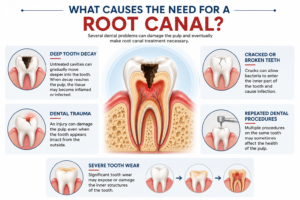
Several dental problems can damage the pulp and eventually make root canal treatment necessary.
Common causes include:
Deep Tooth Decay
Untreated cavities can gradually move deeper into the tooth. When decay reaches the pulp, the tissue may become inflamed or infected.
Cracked or Broken Teeth
Cracks can allow bacteria to enter the inner part of the tooth and cause infection.
Dental Trauma
An injury can damage the pulp even when the tooth appears intact from the outside.
Repeated Dental Procedures
Multiple procedures on the same tooth may sometimes affect the health of the pulp.
Severe Tooth Wear
Significant tooth wear may expose or damage the inner structures of the tooth.
How is Root Canal Treatment Diagnosed?
Root Canal Treatment in Indore begins with an accurate diagnosis.
During the dental examination, the dentist may evaluate:
- Your symptoms
- Tooth sensitivity
- Pain while biting
- Gum condition
- Tooth colour
- Previous dental history
- Any history of trauma
Dental X-rays may also be used to assess the roots and surrounding bone.
Depending on the symptoms, additional diagnostic tests may be performed to determine whether the pulp is healthy, inflamed, or infected.
An accurate diagnosis helps the dentist decide whether root canal treatment is necessary or whether another treatment would be more appropriate.
What Happens During a Root Canal Treatment?
Many patients feel nervous when they hear the words “root canal.” However, modern dental techniques can make the procedure significantly more comfortable.
The treatment generally involves the following steps:
1. Dental Examination
The dentist examines the tooth and reviews your symptoms and dental history.
2. Local Anaesthesia
Local anaesthesia is used to numb the affected tooth and surrounding area.
3. Accessing the Tooth
A small opening is made in the tooth to reach the infected or inflamed pulp.
4. Removing the Infected Pulp
The damaged pulp tissue is carefully removed.
5. Cleaning and Disinfecting the Canals
The root canals are cleaned and shaped to remove bacteria and infected tissue.
6. Filling and Sealing
The cleaned canals are filled with a suitable material and sealed to reduce the risk of reinfection.
7. Restoring the Tooth
The tooth may require a filling or dental crown depending on how much tooth structure remains and its location.
The restoration helps protect the treated tooth and allows it to function normally.
Is Root Canal Treatment Painful?
One of the biggest concerns patients have is whether root canal treatment will hurt.
With modern dental techniques and appropriate local anaesthesia, most patients can undergo the procedure with little or manageable discomfort.
The pain associated with an infected tooth can sometimes be more uncomfortable than the treatment itself.
After treatment, mild sensitivity or soreness may occur for a short period. Your dentist can provide appropriate advice for managing any post-treatment discomfort.
Why Is Saving the Natural Tooth Important?
When possible, preserving your natural tooth is generally preferable to removing it.
A natural tooth helps maintain:
- Normal chewing
- Proper bite
- Tooth alignment
- Jaw function
- Natural appearance
Removing a tooth may create a gap that can affect neighbouring teeth and chewing function. Depending on the situation, tooth replacement options such as dental implants, bridges, or dentures may then be considered.
Root canal treatment can help preserve a natural tooth that might otherwise need to be extracted.
What Happens If You Delay Root Canal Treatment?
Ignoring symptoms of an infected or damaged tooth can allow the problem to progress.
Possible complications may include:
- Increasing tooth pain
- Dental abscess
- Gum swelling
- Infection around the tooth
- Bone damage around the root
- Spread of infection to nearby tissues
- Eventual tooth loss
Not every painful tooth needs a root canal, but persistent symptoms should always be evaluated rather than ignored.
How Can You Prevent the Need for a Root Canal?
Not every root canal can be prevented, especially when dental trauma occurs. However, good oral hygiene can reduce the risk of deep tooth decay and other dental problems.
Helpful habits include:
- Brush your teeth twice a day.
- Use fluoride toothpaste.
- Floss or clean between your teeth daily.
- Limit sugary foods and drinks.
- Avoid using your teeth to open packages.
- Wear a mouthguard during contact sports.
- Visit your dentist for regular check-ups.
- Treat cavities early.
- Do not ignore persistent tooth pain.
Early treatment of dental decay can often prevent the problem from reaching the tooth pulp.
When Should You See a Root Canal Specialist?
You should schedule a dental appointment if you experience:
- Persistent toothache
- Severe sensitivity to hot or cold
- Pain while chewing
- Swollen gums
- Facial swelling
- Tooth discoloration
- A pimple or abscess near the tooth
- A cracked or injured tooth
- Repeated pain in the same tooth
- Bad taste or pus near the affected tooth
A dental examination can determine the actual cause and whether root canal treatment is necessary.
Why Choose Dr. Saumya Jain for Root Canal Treatment in Indore?
Dr. Saumya Jain is an experienced Endodontist and Root Canal Specialist in Indore at Indore Poly Dental Clinic.
Her approach focuses on accurate diagnosis, preserving natural teeth, and providing comfortable and personalized dental care.
Patients choose Dr. Saumya Jain because of:
- Experienced Endodontist
- Expertise in Root Canal Treatment
- Focus on Preserving Natural Teeth
- Conservative Dental Care
- Modern Dental Technology
- Patient-Friendly Treatment
- Personalized Treatment Planning
- Gentle and Comfortable Approach
- Comprehensive Dental Care
- Preventive Oral Health Guidance
Alongside Dr. Sandesh Jain, an experienced Oral & Maxillofacial Surgeon, the clinic provides comprehensive dental care under one roof.
The team aims to make dental treatment easier to understand and more comfortable for every patient.
Summary
Root Canal Treatment in Indore can help save a natural tooth when its inner pulp becomes infected, inflamed, or damaged. Severe toothache, prolonged hot or cold sensitivity, pain while chewing, swelling, tooth discoloration, gum abscesses, and dental injuries are important signs that should not be ignored.
Not every toothache means that a root canal is needed. However, persistent or severe symptoms require professional dental evaluation to identify the underlying cause.
At Indore Poly Dental Clinic, Dr. Saumya Jain, an experienced Endodontist and Root Canal Specialist, provides personalized dental care focused on preserving natural teeth and restoring comfortable oral function.
FAQs – Root Canal Treatment in Indore
What is a root canal treatment?
Root canal treatment is a dental procedure used to remove infected or damaged pulp from inside a tooth. The canals are cleaned, disinfected, filled, and sealed to help preserve the natural tooth.
What are the signs that I may need a root canal?
Common signs include severe or persistent toothache, prolonged sensitivity to hot or cold, pain while chewing, swelling around the tooth, tooth discoloration, gum abscesses, and a cracked or injured tooth.
Is root canal treatment painful?
Modern root canal treatment is performed under local anaesthesia, so most patients experience little or manageable discomfort during the procedure. Some mild soreness may occur afterward.
Can a tooth heal without a root canal?
If the dental pulp is significantly infected or damaged, it generally cannot heal on its own. However, the need for root canal treatment depends on the diagnosis. A dentist should examine the tooth before deciding on treatment.
How long does a root canal treatment take?
The treatment time varies depending on the tooth, the severity of infection, and the complexity of the root canals. Some treatments can be completed in one visit, while others may require additional appointments.
What happens if I delay root canal treatment?
Delaying treatment may allow an infection to worsen, potentially leading to an abscess, increased pain, bone damage, or tooth loss. Timely dental evaluation can help prevent complications.
Do I need a crown after root canal treatment?
Some root canal-treated teeth may need a crown to protect the remaining tooth structure, particularly teeth that experience significant chewing forces. Your dentist will recommend the appropriate restoration based on the condition of the tooth.
Can a root canal save my natural tooth?
Yes. One of the main goals of root canal treatment is to remove infection while preserving the natural tooth. With appropriate treatment and restoration, the tooth can continue to function normally.
Can children need root canal treatment?
Yes. Children can sometimes require pulp treatment when a baby tooth or permanent tooth has deep decay, infection, or trauma. The treatment approach depends on the child’s age, tooth, and stage of development.
Why choose Dr. Saumya Jain for Root Canal Treatment in Indore?
Dr. Saumya Jain is an experienced Endodontist and Root Canal Specialist at Indore Poly Dental Clinic. She focuses on accurate diagnosis, comfortable treatment, preservation of natural teeth, and personalized dental care using modern techniques.
Conclusion – Root Canal Treatment in Indore
Root Canal Treatment in Indore can be an effective way to save a tooth affected by deep decay, infection, trauma, or pulp damage. Persistent toothache, prolonged sensitivity, pain while chewing, swelling, discoloration, gum abscesses, and cracked or injured teeth are warning signs that should not be ignored.
Although these symptoms can have different causes, a professional dental examination is the best way to determine whether a root canal is required.
At Indore Poly Dental Clinic, Dr. Saumya Jain provides advanced and patient-friendly endodontic care with a focus on preserving natural teeth. With proper diagnosis, timely treatment, and good oral hygiene, many damaged or infected teeth can be treated and restored for long-term function.
If you are experiencing persistent tooth pain or sensitivity, timely consultation with an experienced Root Canal Specialist in Indore can help you understand the cause and choose the right treatment for your dental health.