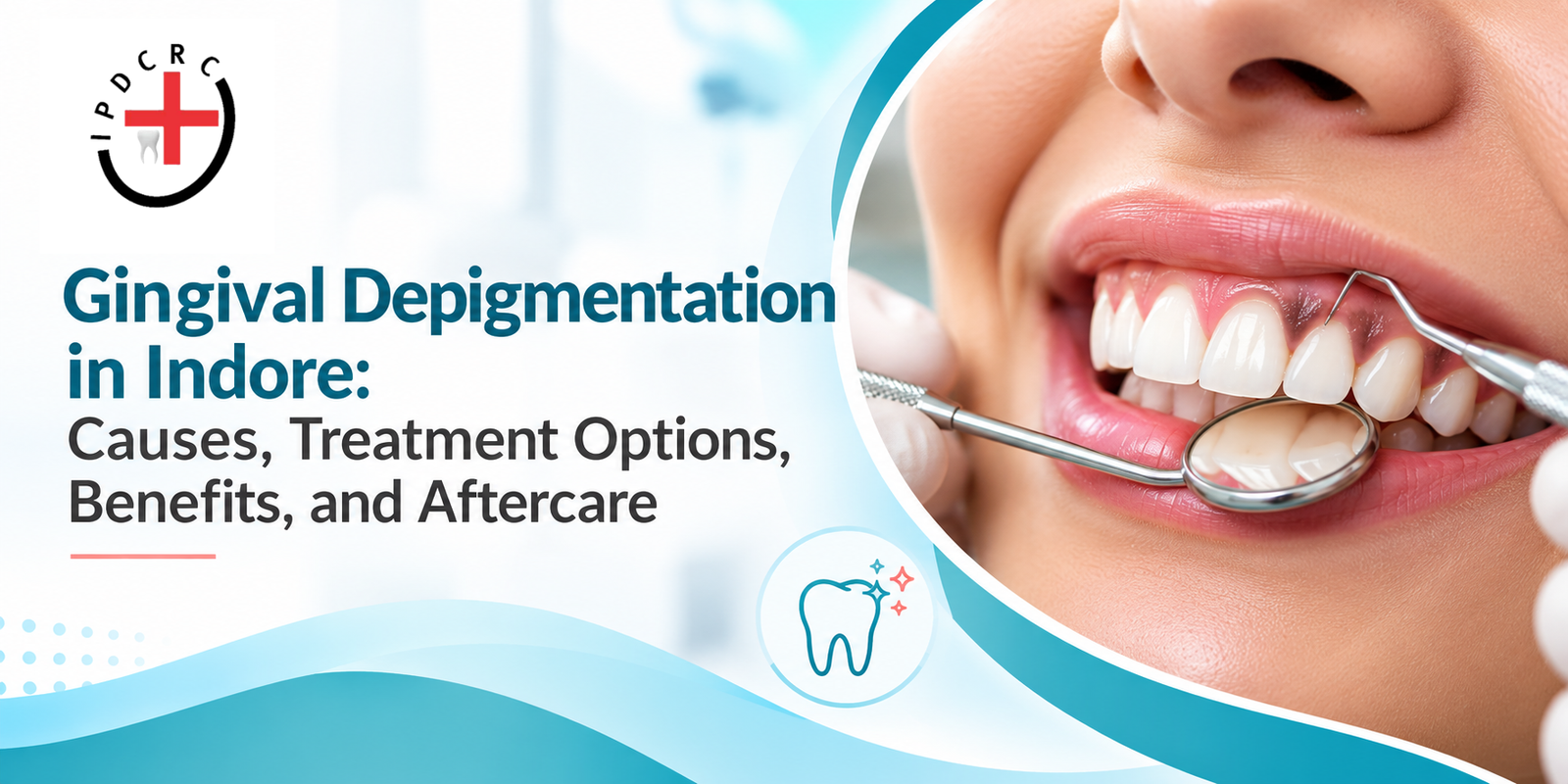
A healthy smile includes healthy teeth and gums. However, some people have naturally dark or brown gums because of melanin pigmentation. Although this is usually harmless, it can make some individuals feel conscious about their smile. Gingival depigmentation in Indore is a cosmetic dental procedure that helps reduce excess gum pigmentation and improve the overall appearance of the gums.
At Poly Dental Clinic, patients can discuss their concerns with Dr. Sandesh Jain, Oral and Maxillofacial Surgeon, and Dr. Saumya Jain, Endodontist. The dental team can evaluate gum pigmentation, assess oral health, and explain suitable treatment options according to individual needs.
If you are searching for gum depigmentation treatment in Indore, understanding the causes, available procedures, recovery process, and possible results can help you make an informed decision.
What Is Gingival Depigmentation?
Gingival depigmentation is a cosmetic dental procedure used to reduce dark or brown patches on the gums. These patches commonly occur because of melanin, a natural pigment found in the body.
The procedure involves treating the pigmented surface layer of the gum tissue using an appropriate dental technique. Once the area heals, the gums may appear lighter and more uniform in colour.
Gingival depigmentation in Indore may be considered by individuals who want to improve the appearance of their gums. However, naturally dark gums are not necessarily unhealthy, and treatment is generally optional when pigmentation is harmless.
Before treatment, a dental professional should examine the gums to confirm the likely cause of discolouration and determine whether a cosmetic procedure is appropriate.
What Causes Dark Gums?
Understanding the cause of gum pigmentation is important before choosing dark gums treatment in Indore.
1. Natural Melanin Pigmentation
Melanin is one of the most common reasons for dark gums. Genetics and natural pigmentation can cause gums to appear brown, dark brown, or almost black. This is often a normal variation in gum colour.
2. Smoking and Tobacco Use
Smoking and tobacco use may contribute to changes in gum pigmentation. Tobacco can also increase the risk of gum disease and delay healing following dental treatment.
3. Certain Medications
Some medicines can cause pigmentation changes in the oral tissues. Inform your dentist about your medications and medical history before undergoing gum pigmentation treatment in Indore.
4. Medical Conditions
Certain medical conditions can sometimes cause dark patches in the mouth. New, unusual, irregular, or changing pigmentation should be evaluated by a dental or medical professional rather than treated as a cosmetic concern without investigation.
5. Local Irritation or Other Oral Changes
Some gum colour changes may occur alongside inflammation, irritation, or other oral conditions. A dental examination helps determine whether further investigation or treatment is required.
Who Can Consider Gingival Depigmentation in Indore?
Gingival depigmentation may be suitable for adults with benign gum pigmentation who want to improve the appearance of their smile.
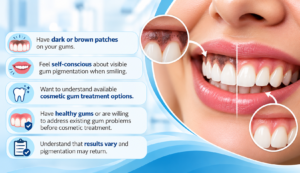
You may consider a consultation if you:
- Have dark or brown patches on your gums.
- Feel self-conscious about visible gum pigmentation when smiling.
- Want to understand available cosmetic gum treatment options.
- Have healthy gums or are willing to address existing gum problems before cosmetic treatment.
- Understand that results vary and pigmentation may return.
A consultation with a cosmetic dentist in Indore can help establish whether treatment is appropriate. The dentist will consider your gum health, pigmentation pattern, medical history, and expectations before recommending a procedure.
Gingival Depigmentation Treatment Options
The most appropriate method depends on the extent of pigmentation, gum condition, and clinical assessment.
1. Surgical Gum Depigmentation
Surgical depigmentation involves carefully removing the pigmented surface layer of gum tissue using suitable dental instruments. The treated area then heals naturally.
This technique can reduce the appearance of pigmentation, but healing instructions must be followed carefully. Your dentist will explain the expected recovery and potential risks.
2. Laser Gum Depigmentation
Laser gum depigmentation in Indore uses laser energy to treat pigmented gum tissue. Depending on the equipment and clinical situation, it may allow controlled treatment of the affected area.
Laser treatment is not automatically the best option for every patient. Its suitability depends on the pigmentation, gum health, available equipment, and the dental professional’s experience.
3. Other Depigmentation Techniques
Other techniques may be considered depending on the patient’s condition and the dentist’s clinical judgement. Each method has different benefits, limitations, healing requirements, and chances of pigmentation recurrence.
At Poly Dental Clinic, patients can discuss their concerns with Dr. Sandesh Jain and Dr. Saumya Jain to understand the dental evaluation and care appropriate for their needs.
What Happens During Gingival Depigmentation?
Understanding the treatment steps can help patients feel more prepared.
Step 1: Dental Examination
The dentist examines the gums and evaluates the pattern of pigmentation. Medical history, medication use, and existing gum problems may also be reviewed.
Step 2: Treatment Planning
The dentist discusses suitable treatment options, expected results, possible complications, and aftercare requirements. The final approach depends on the clinical findings.
Step 3: Local Anaesthesia
Local anaesthesia may be used to minimise discomfort during the procedure. The exact approach depends on the technique and the area being treated.
Step 4: Pigmentation Treatment
The dentist treats the pigmented gum tissue using the selected method. The procedure time varies depending on the size and location of the affected area.
Step 5: Healing and Follow-Up
The gums need time to recover after treatment. Following the dentist’s instructions and attending follow-up appointments can help monitor healing.
Benefits of Gingival Depigmentation
Gingival depigmentation in Indore may provide cosmetic benefits for suitable patients.
More Uniform Gum Colour
The procedure can reduce the appearance of dark patches and help create a more even-looking gum line.
Improved Smile Appearance
People who feel concerned about visible gum pigmentation may feel more comfortable with their smile after treatment.
Individualised Treatment Planning
The dental professional can recommend an approach according to the pigmentation pattern, gum condition, and patient preferences.
Targeted Cosmetic Improvement
Depending on the clinical assessment, treatment may focus on the areas where pigmentation is most visible.
Professional Assessment of Gum Health
A dental consultation helps identify whether dark gum pigmentation is a natural variation or requires further investigation.
Results differ from person to person. Gingival depigmentation does not guarantee permanently lighter gums, and pigmentation can return over time.
Is Gingival Depigmentation Painful?
The procedure is generally performed using measures to reduce discomfort, including local anaesthesia when appropriate. Mild tenderness, swelling, or sensitivity may occur during the healing period.
The level of discomfort depends on the technique used and the extent of treatment. Follow your dentist’s instructions and seek advice if pain becomes severe, swelling increases, or bleeding persists.
If you are considering gum depigmentation treatment in Indore, discuss your concerns and medical history during the consultation so that the dentist can explain what to expect.
Recovery and Aftercare Following Gingival Depigmentation
Proper aftercare supports healing and helps reduce the risk of complications.
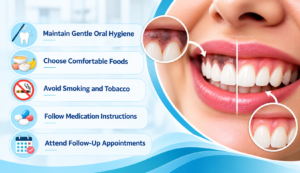
Maintain Gentle Oral Hygiene
Clean your teeth and gums according to your dentist’s instructions. Avoid brushing directly over healing tissue if you have been advised to do so.
Choose Comfortable Foods
Soft foods may be easier to eat during the early recovery period. Avoid foods that are very hot, spicy, hard, or crunchy if they irritate the treated area.
Avoid Smoking and Tobacco
Smoking and tobacco use can interfere with oral healing. Avoid them during recovery and discuss quitting support if needed.
Follow Medication Instructions
Take prescribed medicines only as directed. Do not apply unapproved products or home remedies to the treated gums.
Attend Follow-Up Appointments
Follow-up visits allow the dentist to check healing and address any concerns. Recovery time depends on the technique used and the extent of treatment. Contact your dentist promptly if you experience increasing pain, persistent bleeding, significant swelling, fever, or other unexpected symptoms.
Can Gum Pigmentation Return After Treatment?
Yes. Gingival depigmentation may not provide permanent results. Pigmentation can return because pigment-producing cells may remain in the tissue or become active again during healing. The likelihood of recurrence varies according to individual biology, the original pigmentation, and the technique used. Before choosing laser gum depigmentation in Indore or another treatment method, ask your dentist about realistic expectations and the possibility of repeat treatment.
Why Consult Dr. Sandesh Jain and Dr. Saumya Jain?
Choosing the right dental professional starts with understanding your concern and receiving an appropriate oral examination. At Poly Dental Clinic, Dr. Sandesh Jain is an Oral and Maxillofacial Surgeon, while Dr. Saumya Jain is an Endodontist. Patients can discuss gum appearance and other dental concerns with the clinic’s dental team to understand the next steps for assessment and care.
A consultation can help clarify the cause of pigmentation, whether further investigation is needed, which treatment approaches may be suitable, and what recovery may involve. The recommended treatment should be based on clinical findings rather than cosmetic expectations alone.
About Poly Dental Clinic in New Palasia, Indore
Poly Dental Clinic provides dental and maxillofacial care for patients of different age groups. The clinic is associated with Dr. Sandesh Jain, Oral and Maxillofacial Surgeon, and Dr. Saumya Jain, Endodontist.
Patients looking for gingival depigmentation in Indore can discuss dark gum pigmentation, available cosmetic procedures, oral health considerations, and aftercare during a dental consultation.
Frequently Asked Questions – Gingival depigmentation in Indore
1. What is gingival depigmentation in Indore?
Gingival depigmentation in Indore refers to cosmetic dental treatment intended to reduce excess pigmentation in the gums. A dentist evaluates the cause of the pigmentation and determines whether treatment is appropriate for the individual patient.
2. Who should consider gum depigmentation in Indore?
Gum depigmentation in Indore may be considered by individuals who are concerned about naturally dark gums or visible pigmented patches. A dental examination is necessary to confirm that the pigmentation is suitable for cosmetic treatment.
3. How do I choose a dental clinic in Indore for gum depigmentation?
When selecting a dental clinic in Indore, consider the dentist’s qualifications, available treatment options, hygiene practices, explanation of risks, aftercare instructions, and follow-up arrangements.
4. Is gingival depigmentation in Indore a permanent treatment?
Gingival depigmentation in Indore may reduce gum pigmentation, but the results are not always permanent. Pigmentation can return depending on individual characteristics and the treatment technique used.
5. Does gum depigmentation in Indore require anaesthesia?
Gum depigmentation in Indore may involve local anaesthesia depending on the technique and extent of treatment. The dentist can explain what is appropriate for the patient’s specific case.
6. How long does recovery take after gingival depigmentation in Indore?
Recovery after gingival depigmentation in Indore varies according to the technique used, the extent of treatment, and individual healing. The treating dentist will provide a recovery estimate and specific aftercare instructions.
7. Can a dental clinic in Indore treat all types of dark gums?
A dental clinic in Indore can assess gum pigmentation and discuss suitable options, but not every type of pigmentation should be treated cosmetically. New, unexplained, irregular, or changing patches may require further investigation.
8. What are the possible risks of gum depigmentation in Indore?
Gum depigmentation in Indore may involve temporary discomfort, swelling, bleeding, delayed healing, infection, or changes in gum appearance. Pigmentation can also recur after treatment.
9. Is gingival depigmentation in Indore necessary for healthy gums?
Gingival depigmentation in Indore is generally a cosmetic procedure and is not necessary simply because a person’s gums are naturally dark. Gum health should be assessed separately from gum colour.
10. How should I prepare for gum depigmentation at a dental clinic in Indore?
Before gum depigmentation at a dental clinic in Indore, share your medical history and current medications, ask about the treatment technique and possible risks, and follow the dentist’s preparation instructions.
Conclusion – Gingival depigmentation in Indore
Gingival depigmentation in Indore can be considered by people who want to reduce the appearance of benign dark gum pigmentation and achieve a more uniform-looking smile. Understanding the cause of pigmentation, comparing treatment options, and following appropriate aftercare are important parts of the process.
At Poly Dental Clinic, Dr. Sandesh Jain, Oral and Maxillofacial Surgeon, and Dr. Saumya Jain, Endodontist, are part of the dental team patients can consult about their oral health concerns. A dental evaluation can help determine whether treatment is appropriate and explain its benefits, limitations, and possible risks.